
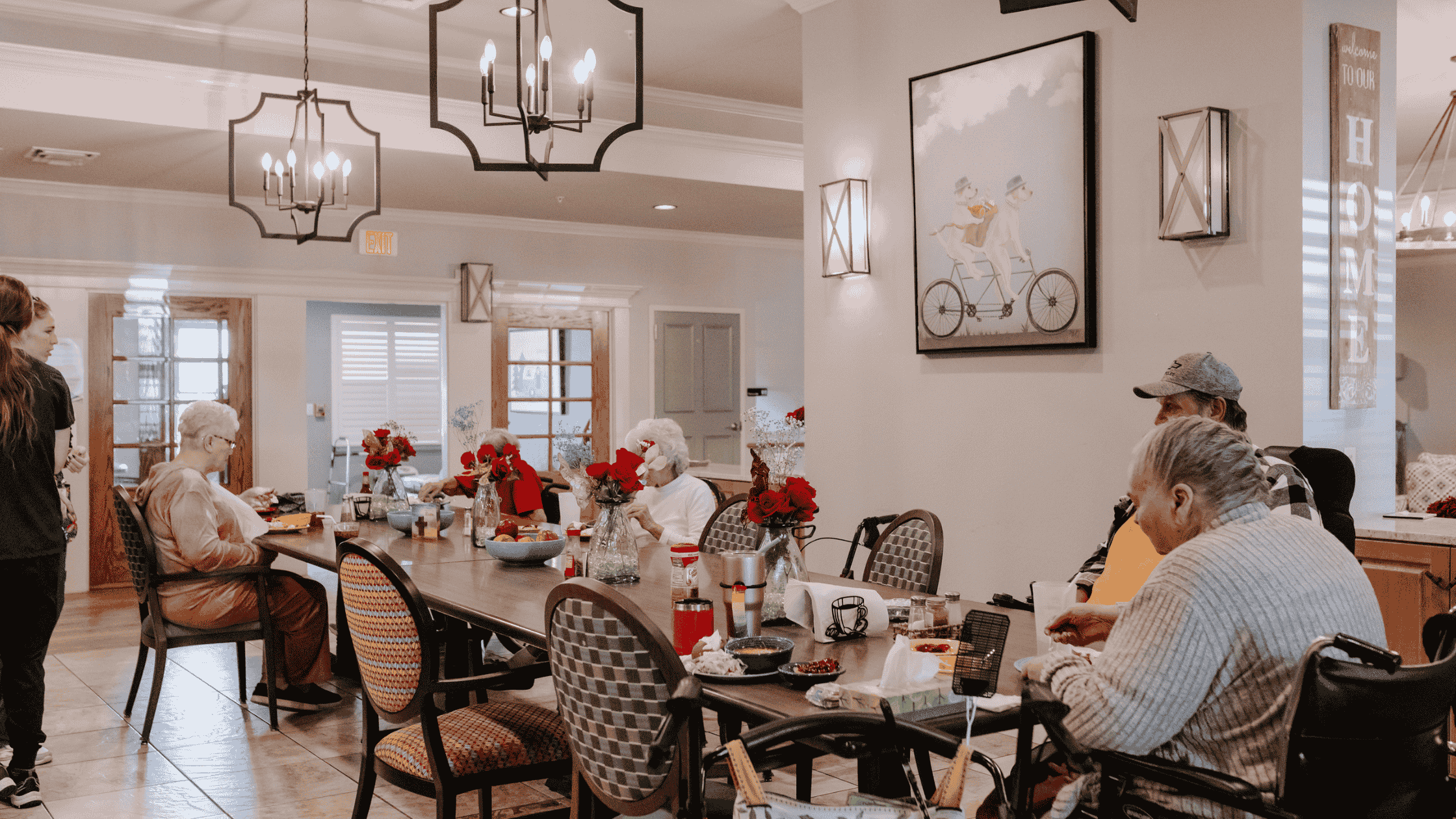

When families begin searching for long-term care, one of their greatest concerns is whether their loved one will feel comfortable and at home. Large hallways, centralized nursing stations, and institutional routines can feel unfamiliar and overwhelming. At The Cottages of Homewood, care looks different — by design.
Built around the nationally recognized Green House® model, the small-home approach creates an environment where elders live in true cottages rather than traditional institutional settings. The result is a space that feels personal, peaceful, and centered on dignity.
Instead of long corridors and large units, the small-home design features intimate cottages with private rooms and shared common areas. Each cottage includes a living room, dining space, and kitchen — just like a traditional home.
Residents:
-
Share meals at a family-style table
-
Spend time in comfortable living spaces
-
Move freely within a cozy, familiar layout
-
Experience a quieter, more relaxed atmosphere
The physical environment alone reduces stress. Smaller spaces mean less noise, fewer unfamiliar faces, and more meaningful interaction throughout the day. For elders, that familiarity supports emotional stability and comfort.
The Green House® model is built on consistent staffing and deeper relationships. Instead of rotating through large teams, caregivers work closely with a smaller group of residents. Over time, bonds naturally form.
Caregivers learn:
-
How each resident prefers their day structured
-
Favorite meals and routines
-
Personal history and interests
-
Subtle changes in mood or health
When caregivers truly know residents, care becomes more intuitive and individualized. It feels less like a service and more like support from someone who genuinely understands.
One of the greatest strengths of the small-home model is autonomy. Residents are encouraged to maintain choice in their daily routines. They may choose when to wake, when to eat, and how to spend their time. Meals are often prepared in the open kitchen, allowing residents to see and smell food cooking — a familiar sensory experience that stimulates appetite and conversation.
Daily life flows more naturally, mirroring the rhythm of a household rather than a facility schedule. This sense of control helps preserve identity and dignity, even as care needs increase.
The small-home design offers measurable benefits beyond emotional well-being. Research has shown that smaller, relationship-based environments can contribute to:
-
Reduced stress and anxiety
-
Improved engagement
-
Fewer behavioral concerns
-
Greater overall satisfaction
When residents feel secure and valued, they are more likely to participate in activities and maintain social connections. Families notice the difference immediately. Visits feel relaxed, personal, and welcoming — more like stepping into a home than entering a healthcare building.
At The Cottages of Homewood, the small-home design reflects a larger philosophy: elder care should prioritize dignity, connection, and quality of life.
Care does not replace living. It supports it.
By creating an environment that feels intimate and personal, The Green House® model ensures that elders remain at the center of every decision. Because sometimes the most powerful change in care begins not with new equipment or procedures — but with simply making a space feel like home.